
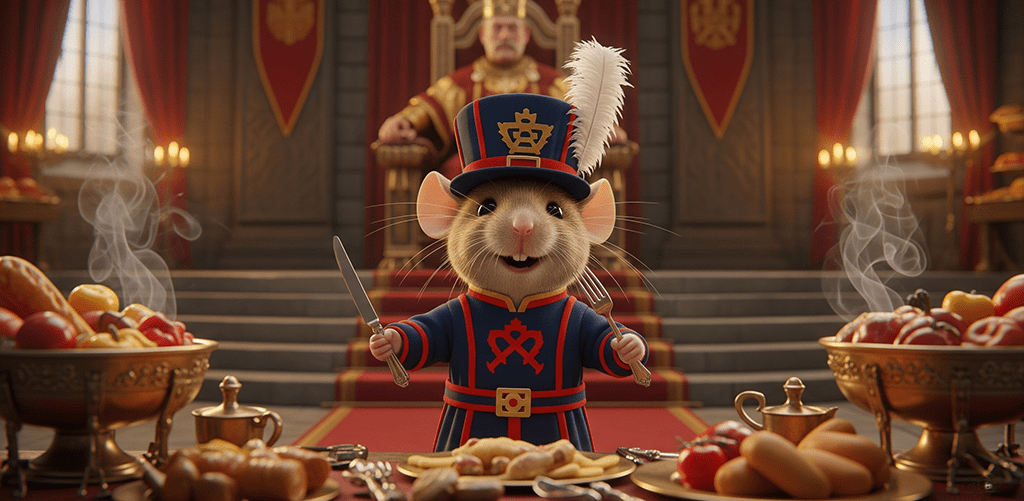
Like the royal food tasters of lore, jobs evolve, more so with the increased use of technology and changing demands of the labor market. As such, it doesn’t hurt to have an exit strategy for your job role.
As a kid, I remember when I first heard about royal food tasters. My mind immediately when to the unlimited smorgasbord (ok, I didn’t use that word) of yummy desserts I would be responsible for “tasting”. Then I was told that the job was to taste a royal’s food in case it was poisoned.
I had to reevaluate. There must be a way to continue meeting an emperor’s needs while not putting myself in harm’s way. Maybe outsource that one task to a nearby rodent? If I could somehow manage that, then perhaps it would free up my time (and life) to do more meaningful work for the emperor.
Like food tasters, there are roles in our companies today that may soon be a thing of the past. Some of them have been driven out slowly by society’s evolving needs, by disruptive business models, and more recently, by the accelerated confluence of world-wide changes. Since the pandemic, more companies now have remote work, artificial intelligence, work-life balance, sustainability, social governance and generational workforce unknowns to address. All this influences current and future labor markets.
What should we do about it and when?
Over the next five years, perhaps we should reframe our work from the point of view of someone working themselves out of a job in an AI era. I don’t mean this in a negative sort of way. Every job role has objectives, tasks or missions to be completed successfully. Think of it as your exit strategy once you’ve finally won. It’s better being in control of when to move on versus trying to find a reason to stay or being asked to move.
While all jobs are affected one way or another, these are five corporate areas that may feel the most immediate impact because of Gen AI. As examples, I tried to suggest a role alternative based on skills or traits they possess or could more easily develop.
- From Administration to Office Manager, Chief of Staff or HR Partner
Admins already excel at time management, prioritization, communication, etc. They are comfortable with working with leaders and are a trusted, central support member of any department. Most have seniority and know the ins and outs of company culture and relationships, making them highly effective in these roles. - From Communications to Marketing, Recruiting or Organizational Psychology
Great communication requires knowing your audience and speaking to them in “their own language”. The ability to understand people and connect is fundamental to the influencing needed in marketing and to the understanding needed by org psychologists to decipher employee feedback. - From Training, Teaching to Career Coaching, Mentoring or Agents
Teachers, especially those in early education, adapt to the unique learning needs of their students. Their patience and ability to manage multiple stakeholders makes them great candidates for corporate coaching or mentoring roles. Having a strong understanding of their stakeholders needs also makes them ideal candidates for roles where they advocate and represent the best interests of others. - From Diversity, Equity, Inclusion & Belonging to Change Management or Counseling
Social commentary aside, DEIB has succeeded in bringing awareness of these topics to the forefront of many corporate settings. Those in this area have a high degree of empathy, passion and understanding of what it takes to change behaviors. These skills are critical in both Organizational Change Management and counseling roles. - From Video, Graphic Design to Creative Directors, Art Consultants or Private Artists
AI may accelerate the production of artifacts, but creative directors are needed to translate a client’s vision into a finished piece. Artists also have a unique way of understanding what evokes deep thought or feeling in people, making them ideal art consultants. Lastly, while the digital space may get flooded with mass-produced AI assets, there will always be a market for bespoke works using uncommon physical media.
Knowing I have friends and family that fit into some of these areas above, I struggled writing this until I remembered a quote by the brilliant economist and social commentator, Thomas Sowell:
When you want to help people, you tell them the truth.
When you want to help yourself, you tell them what they want to hear.
As you consider your own job exit strategies, keep in mind what your leadership may look like 10 years from now and start adapting your skillsets. I for one, have already started giving this some thought. Instead of fighting the artificial intelligence tide, I’ve decided to make it my rodent.
I hope it likes Casu martzu.

 Twistymind
Leave a comment