

Traditional corporate hierarchies could benefit from re-evaluation and innovation at all levels. Introducing the CAUSE model. This new approach aims to enhance agility, transparency, and employee engagement while addressing long-standing cultural issues like silos and self-preservation values.
If you’ve ever worked or plan to work in the corporate world, you’ll come to realize that the idiosyncrasies of org hierarchies are all too similar to those of a Dilbert cartoon. The sad truth is that nothing has really changed in the past hundred years and it’s likely NOT to change unless we do something different.
Note that while there are other organizational structures, e.g., matrixed, divisional, flat, etc., the traditional hierarchy is the most popular due to it clear chain of command and well-defined roles – it’s also the least useful for fostering people-positive culture, collaboration and innovation.
The Challenge
For those new to corporate hierarchies, it basically breaks down like the tables below. Granted, this structure may be flatter or more layered depending on the company’s size and management philosophy (e.g., startups often skip levels, while large corporations can have more granular tiers), but for the most part, they look like this.
| EXECUTIVE LEVEL |
|---|
| Example C-Level Leaders, CEO, President, Senior Vice Presidents, Managing Director |
| Description Responsible for setting overall strategic direction, long-term planning, and managing relationships with stakeholders, the board and external entities. May oversee multiple departments or divisions. |
| Challenges • Perceived as out of touch with daily operations • May prioritize shareholder value over employee welfare • Communications perceived as lacking transparency • External hires seen as less sympathetic to employee needs |
| Strengths Strategic vision, high-level decision-making, strong leadership, owns culture, tremendous influence |
| Weaknesses Can be disconnected from operational realities, slower to react to ground-level issues, may not prioritize internal communications or culture-building |
| UPPER (Senior) MANAGEMENT |
|---|
| Example Vice Presidents, General Managers, Senior Directors |
| Description Responsible for executing corporate strategy and managing departments, functions or geographies. |
| Challenges • Sometimes too focused on politics or self-preservation • Communications may lack transparency • Can bottleneck decision-making • Risk-averse; may lead through consensus • May prioritize visibility over effectiveness • Gatekeepers to executive visibility and information |
| Strengths Strong leadership, resource allocation, cross-functional coordination and insight, policy setting, risk management |
| Weaknesses Risk of siloed thinking, may struggle to implement top-level vision effectively, may lack detailed operational understanding, vulnerable to corporate politics |
| MIDDLE MANAGEMENT |
|---|
| Example Directors, Regional Managers, Branch Managers, Senior Managers |
| Description Acts as a bridge between upper and lower management. Manages discrete areas or departmental services. Coordinates multiple efforts, responsible for delivering on projects and goals. |
| Challenges • Viewed as bureaucratic • Caught in the “sandwich” position between upper and lower levels • Susceptible to micromanagement, reviewing work, unable or unwilling to delegate • Slow to adapt or resistant to change • Risk-averse; may lead through consensus • Gatekeepers to upper management visibility and information |
| Strengths Direct knowledge of strategic plans, goals and objectives. Executes with operational oversight. Strong cost, resource, risk management and team building skills. Enables communication between levels. |
| Weaknesses Can become overwhelmed by balancing top-down directives and team needs. Effectiveness may depend on soft skills and clarity from upper management. Perceived as last level that expects a work-life balance. |
| LOWER (First-Line or Supervisory) MANAGEMENT |
|---|
| Example Supervisors, Team Leaders, Project Managers |
| Description Oversees day-to-day activities, directly manages individual contributors, team performance, career development, and basic problem-solving. |
| Challenges • May lack authority or resources • Often underappreciated • Provides inconsistent experience to staff due to varying management styles • Struggles to manages expectations upwards and tasks downwards • Subject to micromanagement • Time spent creating reports that just get passed upwards • Gatekeepers to middle-management visibility and information |
| Strengths Strong understanding of team dynamics, direct communication with employees, quick problem-solving, highly trusted by staff, influential in employee’s intent to stay |
| Weaknesses Limited strategic influence, high pressure with minimal control. Overworked and under-supported with training or resources |
| OPERATIONAL LEVEL (Individual Contributors) |
|---|
| Example Specialists, Analysts, Technicians, Admins, Workers |
| Description Executes the core work of the company, performs the essential tasks, provides specific expertise or labor to deliver products/services. Generates bulk of company revenue. |
| Challenges • May feel undervalued or excluded from decision-making • Minimal upward mobility • Higher risk of burnout • May feel disconnected from their company (Ivory Tower Syndrome) • Heavy preference for compensation and work-life balance • Proverbial “canary in the coal mine” for company decisions |
| Strengths Subject matter or hands-on expertise, direct impact on productivity and quality, reliable. Detailed knowledge can drive innovation. Best indicator of company employee health. |
| Weaknesses Little autonomy or strategic input; vulnerable to poor management decisions, can become siloed or disengaged without career path clarity or recognition. Overworked, with little to no time for personal or career development. |
As you can see, each level has some big challenges and concerns. Not surprisingly, the root cause for much of these challenges is the hierarchy. But beyond that, it’s also the roles created by the hierarchy that create problems.
Don’t get me wrong, I understand the value of hierarchies and how they are necessary within meritocracies. What I’m just suggesting an alternative: why not decouple some roles and balance the hierarchy into a system of checks and balances?
The CAUSE Model
Since it’s all about work (business), let’s look at it from that lens. Instead of a hierarchy based on the control of work, we restructure the org based on the collaboration needed to make work happen. This is my proposal for an org model based on five blocks that are co-equal, aligned, united, self-directed and empowered (CAUSE Model).
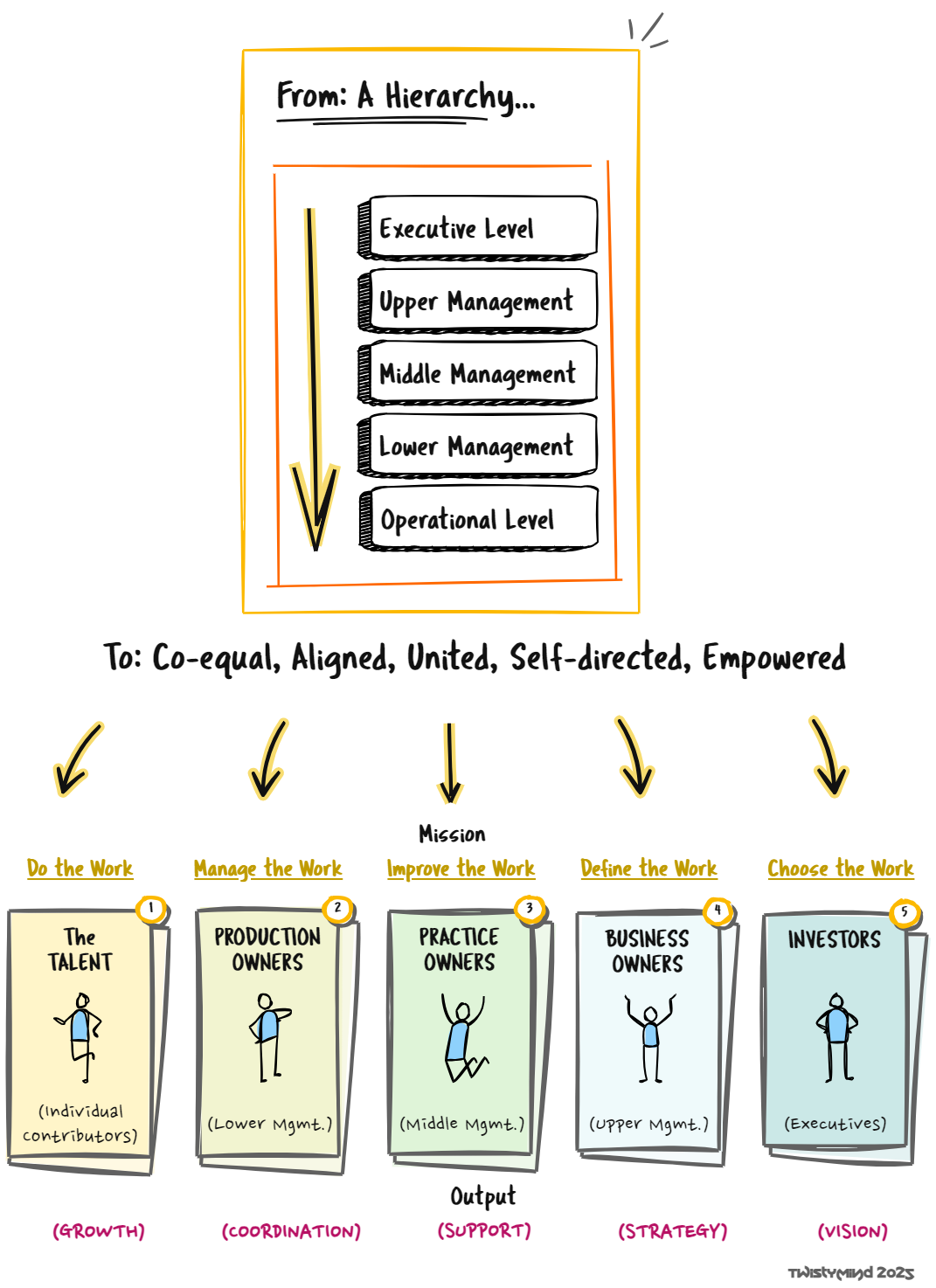
The CAUSE model immediately provides key benefits. For example:
- Highly scalable; more job mobility
- Increased organizational agility
- Prioritize effectiveness over visibility
- Role and goal transparency
- Team-mindset in realizing company vision
To add a little more detail, I’ve detailed key responsibilities below.
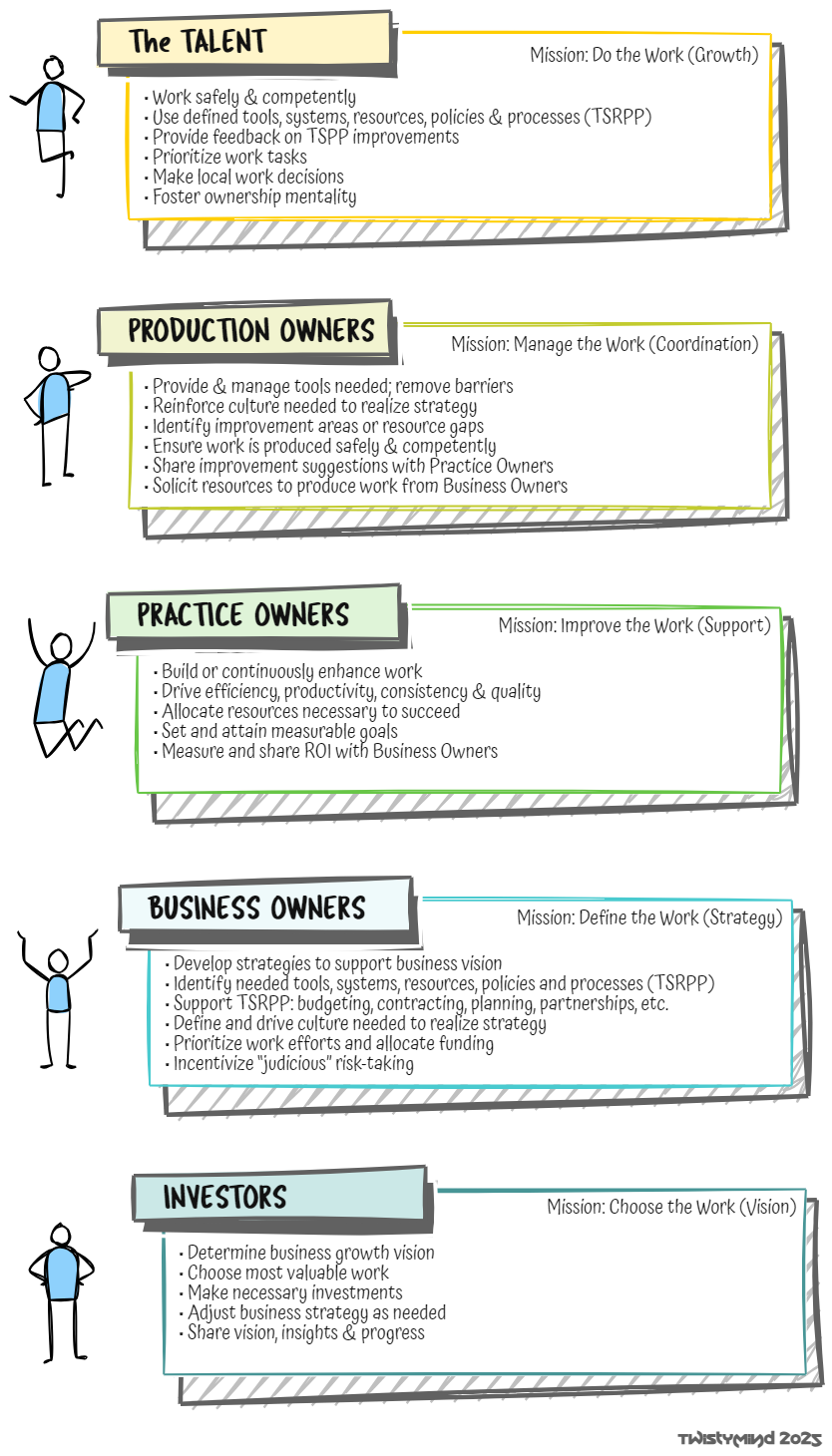
As mentioned, collaboration to make work happen is a critical part of this model. Each block is equally important to the value chain.

Use Cases
The core of the CAUSE model was built as a response to the criticisms around culture and how businesses operate. Specifically, I wanted to attempt to provide countermeasures to three areas I personally find most egregious:
#1: Siloes
This word is intimately connected to hierarchies. As everyone has their own fiefdoms, it’s hard for leaders to share what they are doing. This leads to solving the same problem multiple ways, with lots of waste.
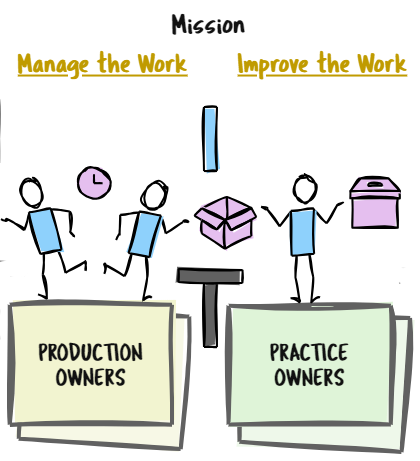
Countermeasure: Instead of breaking down the siloes, let’s punch holes in between them and add windows. For example, under this model, we keep how the work is managed and how the work is improved in separate silos.
Each block doesn’t need to know the details of how the “sausage is made”, but they do need to work together to make sure they are mutually successful. For example, Practice Owners rely on feedback from Production Owners to improve efficiencies, consistency and quality. Production Owners need good tools to meet their goals.
#2 Self-preservation
This cultural malaise is the root cause for many of the behaviors listed: fear of failure (risk-taking), decision by committee, micromanagement, etc. This is understandable and expected though. Being at the top represents power and freedom. When there are only a limited number of positions at the top, the name of the game is “climbing the ladder”, without getting knocked down a rung or two by your actions (or someone else’s).
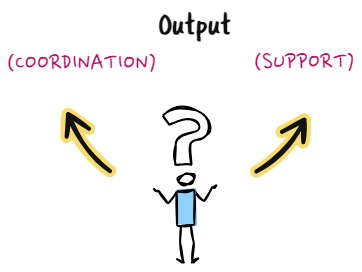
Countermeasure: Switching to horizontal growth instead of vertical growth allows people to move within their block or cross-over into another block. Job mobility therefore becomes more about what you want to do versus how high you want to go to gain authority. In hierarchies, pay is a big driver for people seeking promotions to management. Here, pay is leveraged by rewarding goal achievement, competence and experience.
#3: Bottlenecks
There are lots of articles about empowering those closest to the work, with decision-making (moving the authority where the information lives). In fact, one of my favorites is from US Navy Captain David Marquet. It really is an impressive example of what can be unleashed when this happens. The sobering part, unfortunately, is that it takes a bold type of leadership to consciously make the effort to do this and companies typically have too much cultural debt to change.
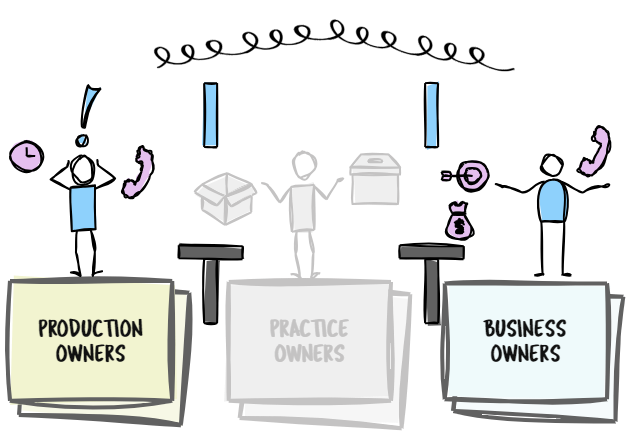
Countermeasure: By creating a united, self-directed and aligned model, we empower each block to do what is necessary to make their part function. This works both ways in that executives are not expected to know and control every detail on the ground-level and those on the ground can make local decisions, even directly seeking resources. There is also no gate-keeping either. Each block is encouraged and incentivized to work directly with other blocks to help each other succeed.
Bringing it to Life
Moving from a traditional hierarchy to the CAUSE model may seem like a daunting task, but the reality is most of the components are there already.
Executives: The toughest audience to change, but as seen, this level has changed the least. If anything, time is freed up to focus more on the business strategy.
Upper Management: Leaders will likely experience discomfort if they are not already experienced with creating and effectively sharing strategy. In addition, the responsibility of driving work culture could be challenging. You will need several sponsors here, so expect strong push-back.
Middle Management: This group would be affected the most. While they would no longer be the “sandwich” between levels and benefit from role clarity, changes will likely be perceived as a “demotion” or loss of authority. Expect strong push-back here.
Lower Management: Front-line managers would benefit greatly from being able to directly solicit resources from upper management. There would be little push-back here.
Individual Contributors: ICs have the most to gain from this model in that they indirectly gain valued experience in decision-making and connecting their work to business success. There would be little push-back here, until confidence is gained.
I hope I’ve started making the case for an alternative to hierarchies or at least got you thinking about it. I’m sure there is more that I haven’t considered and if you are eagle-eyed, you probably already noticed one particular omission already. I’ll be writing about that next.


Leave a Reply